
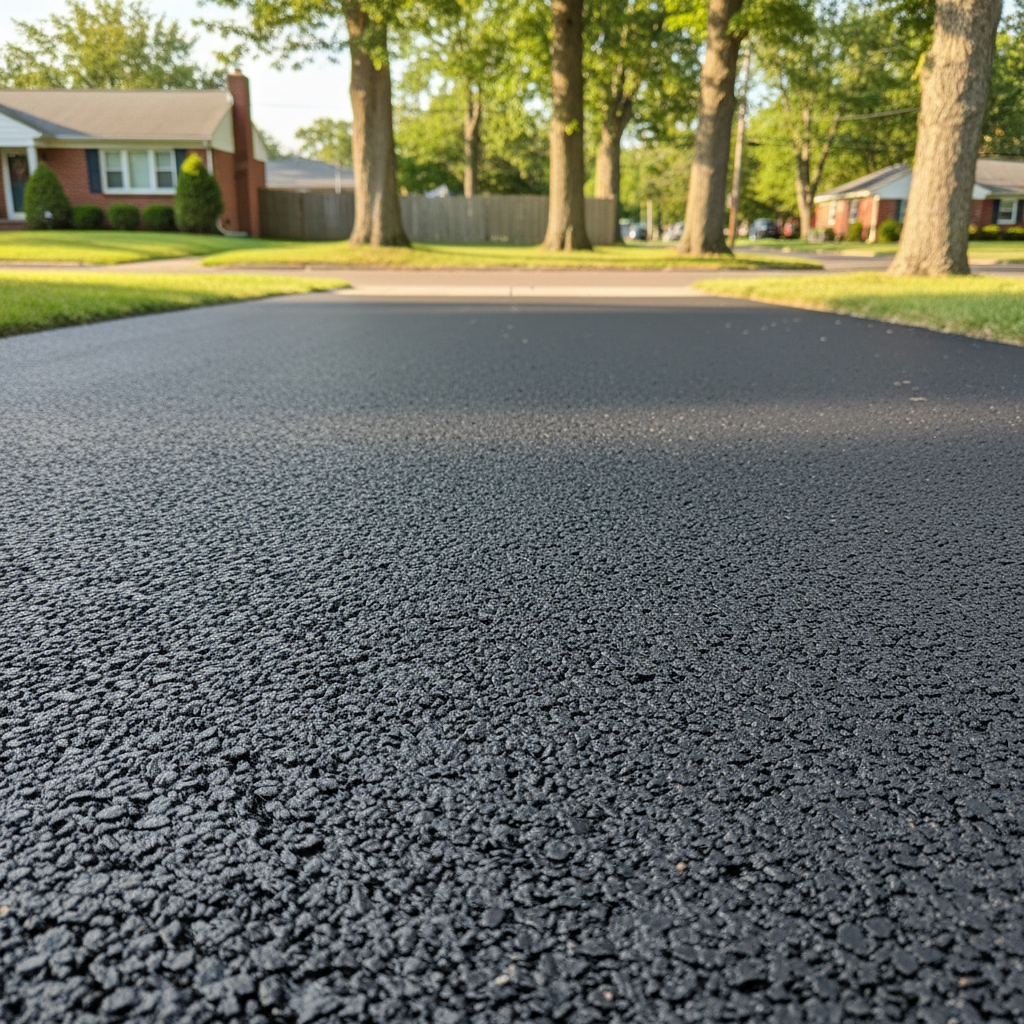
Asphalt looks simple from the street. It's black, it's flat, it's done in a day or two. What you can't see from the curb is the part that actually determines whether it lasts 20 years or needs patching by its third winter, and that part happens before a single ton of mix gets laid down.
Start with what's under your feet, not what's on top
Valley Stream sits on Long Island's glacial till, which is a mixed bag of sand, silt, and clay depending on where you are in the village. Near Mill Brook and the older sections off Merrick Road, a lot of lots have decades of fill under them from when the area was built up through the 1920s to the 1950s. Fill compacts unevenly. If a contractor doesn't excavate down to a stable subgrade and rebuild a proper base, you're paving over a soft spot, and soft spots pump water and crack within a year or two.
A base course should run 4 to 6 inches of crushed stone, compacted in lifts with a plate or roller, not just dumped and driven over once. Ask what they're using for base material and how they're compacting it. If the answer is vague, that's your answer.
What a real estimate spells out
A one-line price on a napkin tells you nothing. A written estimate should tell you the base depth, whether it's a two-layer install (binder course plus surface course) or a single lift, the thickness of each layer, and roughly how many tons of mix the job needs. For a standard driveway you're usually looking at a 2-inch binder course and a 1.5 to 2-inch surface course, laid with a tack coat between them so the layers actually bond instead of sliding apart under a car's weight.
Get the grade on paper too. Water has to move off the surface at around a quarter inch of slope per foot, away from the garage and toward the street or a drain. In a flat-lot village like this, a driveway that holds water in the middle isn't a cosmetic issue, it's a freeze-thaw problem waiting for January.
Winters here decide how long the work lasts
Nassau County typically sees somewhere in the range of 30 to 40 freeze-thaw cycles a winter. Water gets into any crack, freezes, expands, and widens that crack. Add road salt, which accelerates surface raveling on asphalt that wasn't compacted properly, and a weak install shows its flaws fast.
This is also why timing matters. Hot mix asphalt needs to go down warm and get compacted before it cools, and that's hard to do right once nighttime temperatures start dropping into the 40s. A contractor who's willing to pave your driveway in late November because they need the work is telling you something about how they make decisions.
Licensing, insurance, and the permit most people forget
Ask to see proof of liability insurance before anyone starts. If a piece of equipment damages a water line or a neighbor's fence, you want that covered by their policy, not an argument about yours.
If the work involves a curb cut, a new apron, or any tie-in to the street, that typically needs a permit through the village or, if the road is county-maintained, through Nassau County. The apron tie-in usually gets inspected before the final surface course goes down, because the transition from your driveway to the public road has to match grade and won't get covered up once it's paved. A contractor who's done work in Valley Stream before should already know this process and shouldn't need you to chase it down.
Signs to walk away from
- Someone who shows up unannounced saying they have leftover asphalt from a nearby job and can do yours cheap, today. There's no such thing as leftover hot mix asphalt. It has to be hot when it's placed and loses workability within a couple hours, so this is a sign they're using cold patch or cheap filler, not a real install.
- No written contract, or a contract that doesn't mention base depth, thickness, or square footage.
- A price far below every other bid you got. Asphalt pricing tracks oil prices and tonnage pretty closely across contractors in the same area, so a bid that's 30 to 40 percent lower usually means a thinner base, a thinner surface, or both.
- Pressure to pay the full amount up front, in cash, before any work starts.
- Vague answers about compaction equipment. A plate compactor is fine for small patch repairs. A full driveway or lot needs a vibratory roller to get proper density, generally in the 90 to 95 percent range. If they're not rolling it, it won't hold.
After the job: cure times nobody tells you about
New asphalt needs about 2 to 3 days before you can drive on it regularly, longer if the weather's cool. It needs to cure for 6 to 12 months before it should be sealcoated, because sealer applied too early traps moisture and solvents that haven't fully evaporated out of the mix yet. Any contractor pushing you to sealcoat the same week it's installed is either in a hurry or doesn't know better, and neither is a good sign.
Hairline cracks in the first year aren't automatically a failure. Asphalt moves with temperature, and a little surface checking is normal. What's not normal is a crack that's widening, a low spot that's holding water after every rain, or edges that are crumbling where the base wasn't compacted out to the full width of the pour.
We've done paving, resurfacing, and repair work across Valley Stream and the surrounding towns long enough to see which shortcuts show up two winters later. If you want a straight answer on what your driveway or lot actually needs, take a look at Pavex Paving Contractors and ask us the same questions you'd ask anyone else bidding the job.